
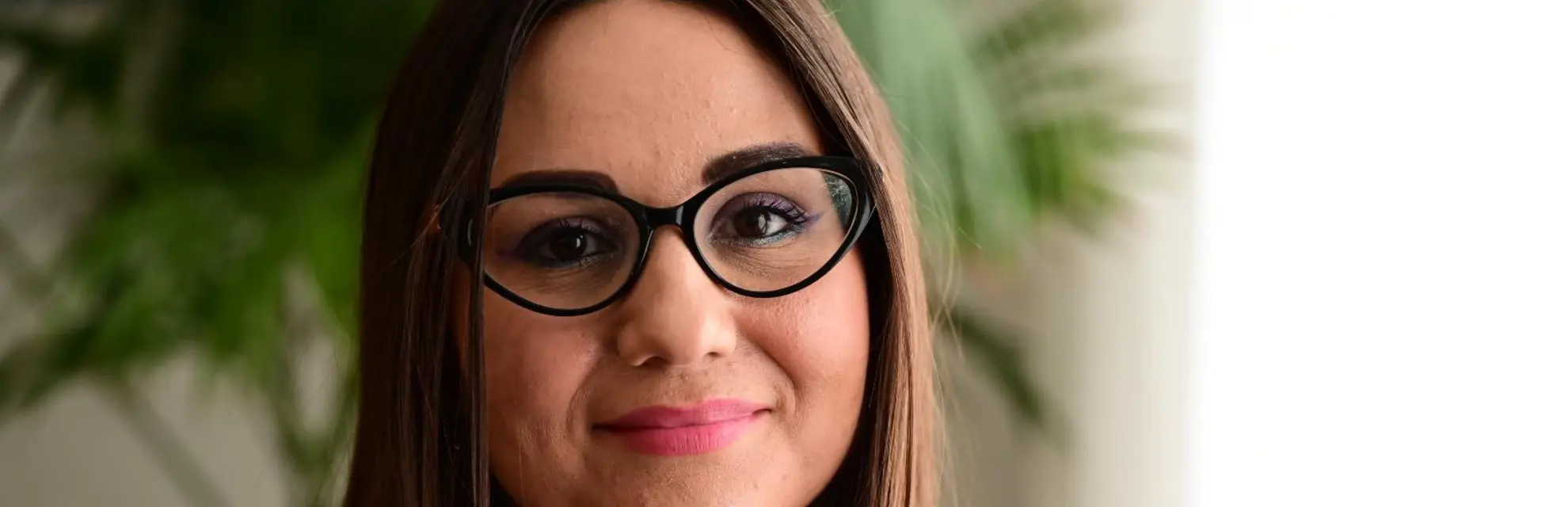
"It’s not on my list to die heroically. So I left the country in early March" – Daria Meshcheriakova, Voices of Ukraine
Daria Meshcheriakova is a journalist with “European Pravda” and sport media outlet Tribuna.com. She was in Luhansk in 2014 when the war started. In 2022 she had to flee the war again, this time from Kyiv.
[vc_row][vc_column width="2/3"][vc_column_text]
Interview with Ukrainian journalist Daria Meshcheriakova
[/vc_column_text][vc_column_text]Daria Meshcheriakova is a journalist with “European Pravda” and sport media outlet Tribuna.com. She was in Luhansk in 2014 when the war started. In 2022 she had to flee the war again, this time from Kyiv. Since May, she has lived in Kosovo, where the Journalist-in-Residence Programme offers a safe space for Ukrainian Journalists to rest and to recover. Daria says she was literally brought back to journalism thanks to participation in the programme.[/vc_column_text][vc_separator][vc_column_text]
How did you decide on the Journalist-in-Residence Programme in Kosovo?
In June 2014 I was visiting my parents in Luhansk right when pro-Russian troops started shelling the city. I ran away as soon as possible and went back home to Kyiv. Then in February 2022, it started again. It was so scary when you were sleeping in your bathroom, hearing explosions outside, and couldn't hold a phone because your hands were shaking so much. I realised It would be too dangerous to stay in Kyiv because I’m a journalist and used to work for the German embassy in Ukraine for some time. It’s not on my list to die heroically. So I left the country in early March.
I studied the war in Kosovo at university and I’ve been there many times. When I saw the programme for journalists, I thought it was a great chance to finally go back to the country. Not as a tourist, not as a researcher on a short-term basis, just to live there, to see the society from the inside, and rest after hard times in Ukraine.
I was hesitating to say yes to it, because I thought of applying for another programme in Germany, where you can get more money for a living. In such hard times, it’s an important issue for us to continue working and paying living expenses. But then I changed my mind. It was time to explore Kosovo finally.
Do you continue to work as a journalist in Kosovo?
Basically Kosovo has brought me back to journalism. Before the Russian invasion I was a freelancer and I used to also work as a manager for the German embassy in Kyiv because I couldn’t pay all my expenses working as a journalist only. Now I work full time for Ukrainian and Kosovo media. I’m very happy about it.
Which issues did you cover before? How has war in Ukraine changed your sphere of interests?
Mainly I used to cover political and sports topics in Ukraine. Many things have changed during the war. Now I work for “European Pravda” and write about European integration of Ukraine. I also write for Kosovo media about the war in my country. I'm a master of political science. That's why it was no problem for me to switch easily.
How has your physical and mental condition changed after several months in Kosovo? Have you noticed improvement? Or is it still difficult?
In the first days of the war I couldn’t eat or drink at all. Not a single drop of water. I lost six kilos. Then I came to the Netherlands and started to eat chocolate at night. There was an airport next to a district I lived in. I knew there were no Russian airplanes but I was still shaking.
It was a really hard time for me, as it is for many other people from Ukraine. When I came to Pristina, the capital of Kosovo, I resumed my tennis lessons. When my parents left the occupied territory, I felt much better.
I think this programme is the best that could happen to us. I’ve been to many similar programmes. Not all of them cared about us as well as in Kosovo. Managers of the programme are doing everything for us and even more. Our manager, Adem, helps us with literally everything. He found apartments and helped with every little detail of our lives. I’ve never seen such a professional attitude before.
Do you feel like the war experience of Kosovo helps you and your work?
Of course, people in Kosovo do understand what Ukrainians are going through. Sometimes Western Europeans sound way too naïve about this war. I have to explain it over and over again and finally get tired of saying the same things. But people in Kosovo don't even ask such things. They all know it already.
You knew a lot about Kosovo when you came to the country. Was there still something unknown, unexpected, or surprising for you?
The only thing that surprised me was the team of the Association of Journalists in Kosovo. They care for us so well. I don’t regret a single day I was there.[/vc_column_text][vc_cta h2=""]The Journalist-in-Residence Programme in Kosovo offers a safe space for 20 Ukrainian journalists. Fellows of the JiR Programme receive a monthly stipend of 500 euros, a rent-free furnished apartment, medical insurance, access to professional training, and psychological support, as well as a one-off payment of 1000 euros for relocation to Kosovo. The duration of the residence is 6 months with a possibility to extend. More information is available here. [/vc_cta][/vc_column][vc_column width="1/3"][vc_widget_sidebar sidebar_id="nicdark_sidebar"][/vc_column][/vc_row][vc_row][vc_column][vc_text_separator title="Related news" title_align="separator_align_left" color="sky"][nd_options_post_grid nd_options_layout="layout-9" nd_options_width="nd_options_width_33_percentage nd_options_float_left" nd_options_orderby="date" nd_options_qnt="6" nd_options_category_slug="journalists-in-residence"][/vc_column][/vc_row]