
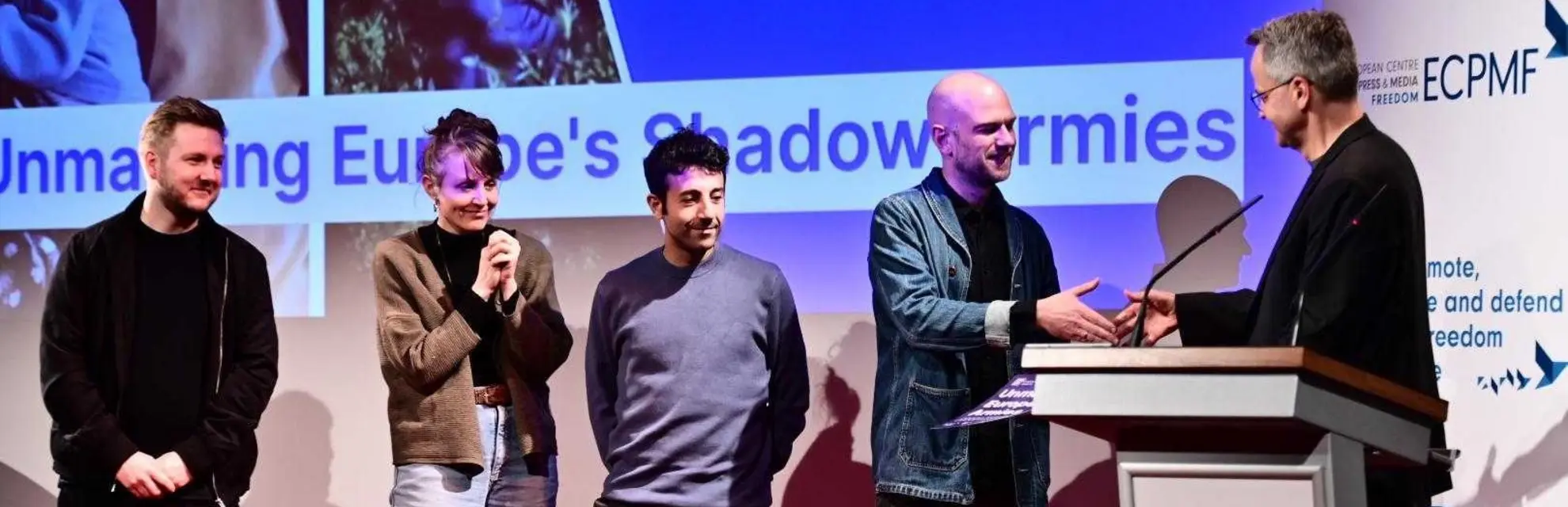
This investigation led by Lighthouse Reports, a Dutch-based non-profit that works with newsrooms across Europe, exposes the mysterious men in masks who beat refugees at Europe’s borders.
[vc_row][vc_column width="2/3"][vc_column_text]This investigation by Lighthouse Reports sheds light on the brutal actions of masked men who are responsible for physical assaults, illegal pushbacks, reckless endangerment and rights abuses against asylum seekers and migrants in Croatia, Greece and Romania. These masked men operate in a grey zone, escaping accountability and preventing any examination of how they are financed or equipped. Despite thousands of personal testimonies from people affected by their violent operations, official denial persists. The investigation includes irrefutable visual evidence and confidential sources among the same officer corps who undertake these actions, providing the most detailed picture yet of this previously covert campaign of illegal and violent pushbacks.
More on the investigation process and impact in the interview with one of the Unmasking Europe's Shadow Armies journalists Bashar Deeb. [/vc_column_text][vc_separator][vc_single_image image="10960" img_size="full"][vc_column_text]
What inspired you to undertake this investigation in the first place?
Well, our team at Lighthouse Reports had been conducting investigations into violence towards migrants and asylum seekers on Europe's borders. One recurring theme we noticed in the testimonies was the presence of masked groups, described as violent and often believed to be police units. We realised that unmasking these groups would be an important step in holding them accountable for their actions.
How did working across borders contribute to your story?
Our team consisted of 16 or 17 individuals with diverse skill sets and backgrounds, some of whom worked at Lighthouse and others who worked elsewhere. Working together as a team, we conducted months of research, built relationships with local actors, NGOs, and communities of migrants, and gathered testimonies. Once we had a better understanding of where the violations were happening, our colleagues organised themselves and went to the borders between Bosnia and Croatia to gather visual proof through footage. Other members of the team conducted visual investigations to identify clues in the uniforms and link the masked groups to different police units. We also had team members with police sources and those skilled in digging through documents. Ultimately, this was a team effort that required the contributions of everyone involved to uncover the truth.
In what ways do you think the investigation has contributed to the larger discussion on migration policies in the European Union?
Well, I can't give you an exact measure of the impact on migration policies, but I do know that the director of Lighthouse Reports presented our findings to the European Parliament. We also have evidence from circulated emails among police officers discussing pushbacks with less violence. So there is an impact, and it feels good to make a difference, even if it's a small one. Unfortunately, pushbacks are still happening daily along Europe's borders.
What countries in your experience are more convenient and conducive for journalists to conduct investigations, and which countries pose more challenges?
We conducted our investigation in Croatia, Romania, and Greece, and unfortunately, none of these countries are particularly friendly towards journalists. Freedom of Information requests are often difficult, and journalists visiting Croatia are often shadowed by police officers. However, countries like Germany, the Netherlands, and France generally have better conditions for journalism. But in many other European countries, it's not that great these days.
How did you obtain your evidence in the countries of the investigation?
For these three countries, we obtained our evidence in different ways. In Greece, we found online footage taken by migrants themselves showing Greek forces attacking and deporting them illegally. In Croatia, some of our colleagues risked their lives to film these violations, and the same was true for Romania. Unfortunately, none of these three countries were particularly helpful in assisting our investigation. We also spoke to some police officers anonymously through their social media profiles. We found them on Facebook and contacted them there.
[/vc_column_text][vc_separator][vc_column_text]
You can watch a full recording of the 2023 IJ4EU Impact Award Ceremony below.[/vc_column_text][vc_raw_html]JTNDaWZyYW1lJTIwd2lkdGglM0QlMjIxMDEzJTIyJTIwaGVpZ2h0JTNEJTIyNTcwJTIyJTIwc3JjJTNEJTIyaHR0cHMlM0ElMkYlMkZ3d3cueW91dHViZS5jb20lMkZlbWJlZCUyRmFoQWZORU81amkwJTIyJTIwdGl0bGUlM0QlMjJJSjRFVSUyMEltcGFjdCUyMEF3YXJkJTIwMjAyMyUyMENlcmVtb255JTIyJTIwZnJhbWVib3JkZXIlM0QlMjIwJTIyJTIwYWxsb3clM0QlMjJhY2NlbGVyb21ldGVyJTNCJTIwYXV0b3BsYXklM0IlMjBjbGlwYm9hcmQtd3JpdGUlM0IlMjBlbmNyeXB0ZWQtbWVkaWElM0IlMjBneXJvc2NvcGUlM0IlMjBwaWN0dXJlLWluLXBpY3R1cmUlM0IlMjB3ZWItc2hhcmUlMjIlMjBhbGxvd2Z1bGxzY3JlZW4lM0UlM0MlMkZpZnJhbWUlM0U=[/vc_raw_html][/vc_column][vc_column width="1/3"][vc_widget_sidebar sidebar_id="nicdark_sidebar"][/vc_column][/vc_row][vc_row][vc_column][vc_text_separator title="Related news" title_align="separator_align_left" color="sky"][nd_options_post_grid nd_options_layout="layout-9" nd_options_width="nd_options_width_33_percentage nd_options_float_left" nd_options_orderby="date" nd_options_qnt="6" nd_options_category_slug="IJ4EU, support"][/vc_column][/vc_row][vc_row][vc_column][/vc_column][vc_column width="1/3"][vc_widget_sidebar sidebar_id="nicdark_sidebar"][/vc_column][/vc_row][vc_row][vc_column][vc_text_separator title="Related news" title_align="separator_align_left" color="sky"][nd_options_post_grid nd_options_layout="layout-9" nd_options_width="nd_options_width_33_percentage nd_options_float_left" nd_options_orderby="date" nd_options_qnt="6" nd_options_category_slug="IJ4EU, support"][/vc_column][/vc_row]